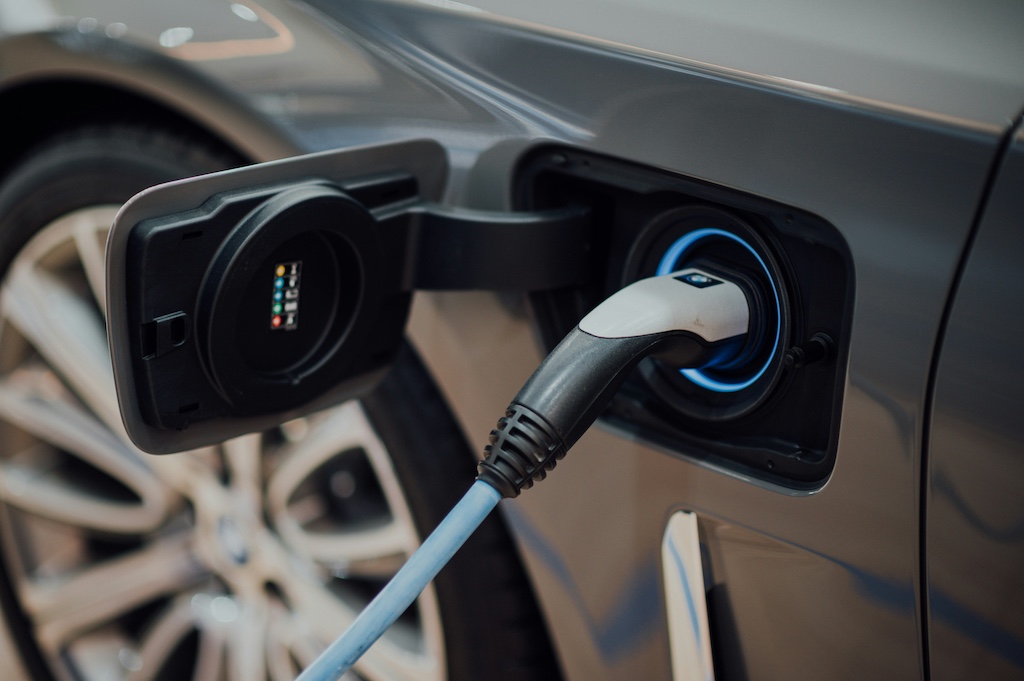
Electric vehicles (EVs) including Tesla models are becoming an increasingly popular choice among Uber drivers in Australia. They're cheaper to run per kilometre, qualify for Uber Green, and come with some genuinely compelling tax advantages. But the tax rules around EVs are different from those for petrol cars, and getting them wrong can cost you significantly. This guide explains exactly how to claim an EV or Tesla on your Uber taxes in Australia, what deductions you're entitled to, and how to make sure you're maximizing every dollar.
Can You Claim an EV on Your Uber Taxes?
Yes, absolutely. As an Uber driver, your vehicle is your primary business tool, and the ATO allows you to claim the business-use portion of your vehicle expenses regardless of whether it runs on petrol, diesel, or electricity. In fact, EV owners have access to a few additional deductions that petrol-car drivers don't, particularly around electricity costs. The key is understanding which method to use and keeping the right records.
The starting point for all vehicle deductions for rideshare drivers is the ATO's ride-sourcing income and deductions guide, which confirms you can claim all costs directly related to providing rideshare services.
The Two Methods for Claiming Your EV
There are two ATO-approved methods for claiming vehicle expenses as an Uber driver.
Method 1: Cents Per Kilometre
This is the simpler option. For 2025–26, the ATO allows you to claim 88 cents per business kilometre, up to a maximum of 5,000 kilometres. That gives you a maximum deduction of $4,400 regardless of what your car actually cost or how much you spent on running it. This method requires no logbook, just a record of your business kilometres (your Uber earnings statement will help here). For part-time drivers doing modest mileage, this can be a quick and easy option.
Method 2: Logbook Method (Actual Costs)
For full-time Uber drivers or anyone doing significant mileage, the logbook method will almost always deliver a much larger deduction. You keep a logbook for a minimum of 12 continuous weeks, which establishes your business-use percentage. You then claim that percentage of all your car's running costs, including:
Electricity (charging costs, see below for the special EV rate)
Registration
Insurance
Servicing and tyres
Car wash and cleaning
Loan interest (if you financed the purchase)
Depreciation (the biggest one, more on this below)
A logbook is valid for five years before needing to be renewed, so the effort of keeping one is a one-off investment that pays dividends every tax year.
What You Can Claim: A Full EV Deduction Checklist
Under the logbook method, here is what Uber EV drivers can claim the business-use percentage of:
Electricity (home and public charging, see ATO's special 4.2c/km rate below)
Vehicle depreciation (capped at the ATO car cost limit, see below)
Loan or finance interest on the vehicle purchase
Registration and CTP insurance
Comprehensive car insurance (rideshare-specific cover recommended)
Scheduled servicing and repairs
Tyres
Car cleaning
Roadside assistance membership
Mobile phone (business-use portion, for navigation and the Uber app)
Uber platform fees and service charges
The ATO's Special Home Charging Rate for EVs
One of the most practical benefits for EV owners is the ATO's dedicated electricity rate under PCG 2024/2. Instead of working through complicated electricity bill calculations, the ATO allows you to use a flat rate of 4.2 cents per kilometre to cover the cost of charging your EV at home.
To use this rate you must:
Own a zero-emissions electric vehicle (note: hybrids and PHEVs do not qualify)
Have actually paid for electricity at home (even if the bill is not in your name)
Record your odometer reading at 30 June each year
This 4.2c/km rate is applied to your total business kilometres and is separate from the 88c/km rate used under the cents per kilometre method. If you use the logbook method, you add the home charging cost (4.2c × business km) to your list of actual costs, then multiply the total by your business-use percentage.
Public charging costs (at Chargefox, Evie Networks, Tesla Superchargers, etc.) can be claimed separately using actual receipts, keep records of every charging session.
The Car Cost Limit: What It Means for EV Owners
The ATO sets a car cost limit, the maximum vehicle purchase price you can use when calculating depreciation deductions. For 2025–26, this limit is $69,674 (GST-inclusive).
This matters for EV owners because many popular models including some Tesla variants are priced above this threshold. Here's what it means in practice:
If your EV cost less than $69,674, you can depreciate its full purchase price (× your business-use %)
If your EV cost more than $69,674, you can only depreciate up to $69,674, the excess is not deductible
For example, if you purchased a Tesla Model Y for $74,900 and your logbook shows 85% business use, your depreciable amount is capped at $69,674 × 85% = $59,223, not the full purchase price.
Depreciation is typically spread over the effective life of the vehicle. For most small businesses, the ATO's Simplified Depreciation rules (small business pool) are the most tax-effective approach. Speak to a registered tax agent if you're unsure which depreciation method applies to your situation.
Is the EV FBT Exemption Relevant for Uber Drivers?
You may have seen headlines about the government's EV Fringe Benefits Tax (FBT) exemption, which was extended to 2029. This exemption, detailed on the ATO's electric cars exemption page, allows eligible battery electric vehicles (BEVs) valued under $91,387 to be provided to employees free of FBT.
However, this exemption is specifically designed for employer-employee arrangements (typically novated leases). As a self-employed sole trader or ABN holder doing rideshare work, you are not an employee and therefore the FBT exemption does not directly apply to your situation.
What does apply to you is the standard income tax deduction framework: you deduct your EV's actual operating costs (or use the cents per km method) based on your business-use percentage. This is often just as powerful especially if your business-use is high.
Also note: from 1 April 2025, plug-in hybrid electric vehicles (PHEVs) are no longer eligible for the FBT exemption. Only full battery electric vehicles (BEVs) and hydrogen fuel cell vehicles qualify. This doesn't affect your income tax deductions, but it's worth knowing if you're considering a novated lease for a second car.
Are Tesla Models Eligible for Uber in Australia?
Yes. Both the Tesla Model 3 and Tesla Model Y are eligible for Uber's platform in Australia, and both qualify for Uber Green, Uber's service tier for zero-emission vehicles. Uber Green typically earns drivers a premium fare, making a Tesla an especially attractive option.
Key Tesla details relevant to Uber drivers in Australia (2026):
Tesla Model 3 starts from approximately $54,900 AUD (below the car cost limit)
Tesla Model Y Standard from approximately $64,900 AUD (below the car cost limit)
Tesla Model Y L (6-seat) from approximately $74,900 AUD (above the car cost limit; depreciation capped at $69,674)
Tesla Model Y Performance from approximately $89,400 AUD (well above the car cost limit)
If tax efficiency is a priority, the Model 3 or base Model Y give you the best outcome, as their purchase price sits at or below the ATO's car cost limit, meaning you can depreciate the full purchase price (× your business-use %).
Keeping a Logbook: The Key to Maximising Your EV Deduction
If you're driving a Tesla or another EV for Uber and aren't keeping a logbook, you're almost certainly leaving significant tax money on the table. The cents per km method caps your deduction at $4,400 but the logbook method has no such cap (other than the car cost limit for depreciation).
Here's how to keep a valid ATO logbook:
Record the odometer reading at the start and end of each trip for at least 12 continuous weeks
Note the date, purpose of each trip (e.g. "Uber trip — passenger transport"), and kilometres travelled
Also record personal trips separately to establish your business vs. private split
Record your odometer on 30 June each year for the home charging rate calculation
Keep the logbook for five years, it's valid for that period unless your usage pattern changes significantly
A logbook app (such as Driversnote or ATO's myDeductions) makes this much easier. Once you have your business-use percentage, apply it to your total annual EV costs and that's your deduction.
For more on managing your records, see our guide to Simple Bookkeeping Tips for Uber and Delivery Drivers and Best Bookkeeping Apps for Uber Drivers (2026 Guide).
What About GST on Your EV?
As a registered GST entity (all Uber drivers must be registered for GST from dollar one), you can claim the GST credit on the business-use portion of your EV purchase. This means you can claim back 1/11th of the car's cost (up to the car cost limit) as a GST credit.
However, there's an important rule: if you claim a GST credit on an expense, you must only claim the GST-exclusive amount as your income tax deduction, not the full price. So you can't double-dip by claiming both the full GST-inclusive price as a deduction and then also claiming the GST credit.
For GST on electricity: if you're using the ATO's 4.2c/km home charging rate, GST credits for electricity are already factored in, you don't need to separately track the GST component of your electricity bill.
Track Your EV Income and Expenses with a Profit & Loss Statement
Running an EV for Uber involves a unique mix of costs, depreciation, electricity, servicing, insurance, and finance charges that are very different from a petrol car. Without a proper record of your income and expenses, it's nearly impossible to know whether your EV is genuinely profitable after all costs are accounted for.
A Profit & Loss (P&L) statement gives you a clear picture: your total Uber income, minus every deductible EV-related expense, equals your taxable net profit. This is the number your tax is calculated on and keeping it as low as possible (legally) is the whole point of claiming your EV costs.
The simplest way to generate a professional P&L statement is with the Accounting Samurai Profit and Loss Statement Generator. Upload your bank statements and Uber earnings summary, and the tool automatically categorises your income and expenses into a clean, professional report — no accountant or complex software required.
A P&L is also essential if you ever need to prove your income for a mortgage, a lease, or a loan application. For more on this, see Proof of Income for Uber Drivers: What Documents Work Best, and Profit & Loss Statements for Gig Workers: What They Are and Why They Matter.
Frequently Asked Questions
Can I Claim My Entire Tesla Purchase Price in One Year?
Not usually. While the ATO's instant asset write-off allows some businesses to immediately deduct assets under $20,000, virtually all EVs are priced above this threshold. You'll instead depreciate your Tesla over time using the small business depreciation pool, subject to the $69,674 car cost limit. A registered tax agent can help you structure this most efficiently.
What If I Use My EV for Both Uber and Personal Trips?
You can only claim the business-use portion of your costs. Your logbook establishes what percentage of kilometres are for Uber vs. personal use. If 80% of your driving is for Uber, you claim 80% of all eligible EV costs.
Do I Need to Keep Charging Receipts?
For home charging, you can use the ATO's flat 4.2c/km rate (no receipts required, just your odometer readings). For public charging (e.g. Tesla Supercharger, Chargefox), you should keep receipts or download your charging history from the relevant app, these are deductible as actual costs under the logbook method.
Is a Hybrid Car Treated the Same as a Full EV?
No. Standard hybrid vehicles are treated like petrol cars for tax purposes, you claim fuel costs normally. Full plug-in hybrid vehicles (PHEVs) lost their FBT exemption from 1 April 2025, though your income tax deduction for running costs is unaffected. Only full battery electric vehicles (BEVs) qualify for the ATO's special 4.2c/km home charging rate.
Can I Also Claim Uber Green Incentive Payments?
Yes, any income you receive from Uber, including bonuses and incentive payments for Uber Green trips, is assessable income and must be declared. The flip side is that all your EV running costs are deductible against that income.
Should I See a Tax Agent?
If your EV cost more than the car cost limit, you have a mix of business and private use, or you have loan finance on the vehicle, it is strongly recommended you work with a registered tax agent for at least your first year of EV ownership. The depreciation calculations in particular can be complex.
Final Thoughts
Driving a Tesla or another EV for Uber can be genuinely tax-efficient, particularly if you're using the logbook method and claiming depreciation, electricity, and all your running costs. The key is keeping good records: a logbook, your annual odometer reading on 30 June, and receipts for public charging.
If you're thinking about whether to rent or buy a vehicle for Uber, check out our guide to How To Rent a Car for Uber & Rideshare in Australia for a comparison of the two approaches.
Once you're earning, use the Accounting Samurai Profit and Loss Statement Generator to stay on top of your finances and make sure your EV costs are being tracked properly throughout the year, not just at tax time.
For more guides tailored to rideshare and gig economy drivers, explore Best Accounting Software for Uber Drivers in 2026 and our Best Bookkeeping Apps for Uber Drivers (2026 Guide).